
Time pressure is real. And increasing. Competing demands from work, family, and social commitments place enormous strain on individuals already stretched thin. The average person juggles multiple tasks and responsibilities every day, trying to make the most of limited time by prioritizing certain tasks, delaying a few, and dropping some entirely.
The digitized world has further influenced habits. Bombarded by instant everything from one-click shopping to instantaneous payments and same-day deliveries, patience has diminished, rewiring expectations. The blurring of work-life boundaries by remote work, constant digital distractions, and the desire to be constantly available has exacerbated the perception of reduced time availability. Research on “time poverty” conducted by Ashley Whillans, a Harvard Business School professor, reinforces this, finding that a staggering 80% of Americans feel rushed or do not have enough time.[1]
Time is money. Digital friction steals customer time.
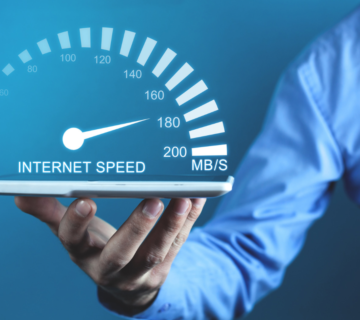
Picture an employee working from home on a critical deadline. Suddenly, the internet connection drops. Every second of buffering, every audio drop-out, and every frozen screen adds to the stress. Every delay chips away at the customer’s trust and confidence in the internet services they pay for.
For online businesses, the real loss occurs when repeated disruptions frustrate customers enough to abandon tasks, question the business’s reliability, or even switch to a competitor. The high value placed on seamless, instant experiences makes even the slightest disruption unacceptable.
The high cost of digital friction highlights the need for businesses to reduce it and protect the customer experience. A frictionless digital experience is a cornerstone of positive customer perception and a meaningful contributor to their quality of life.
The cost of lag for businesses
The impact of lag is both immediate and cumulative. When a digital experience falls short of customer expectations, revenue leakage follows. A Google study found that 53% of mobile users abandon any site that takes longer than 3 seconds to load.[2]
In e-commerce, the impact can be brutal. Slow load times, buffering, or delayed transaction processing impact conversion rates, increase bounce rates, and contribute to significant losses from abandoned carts. Poor digital experiences directly drain bottom lines. Beyond direct sales loss, poor performance weakens brand perception and lifetime value. Reliable performance thus becomes a driver of revenue protection and growth and not just a technical metric.
Impact of smallest inconveniences
Even the smallest digital inconveniences have an exaggerated impact on customer experience perception. Any delay translates into frustration and disappointment. For customers, technical causes mean nothing. The experience defines the brand.
These micro-frictions add up over time, eroding confidence, reducing engagement, and making customers less tolerant of future issues. When expectations are unmet, perceptions shift to distrust, leading customers to disengage or seek alternatives. Ultimately, lost time equates to lost satisfaction.
Network performance as a competitive advantage
For internet service providers (ISPs) in particular, consistent network performance offers a powerful competitive edge. While speed and continuity are considered baseline requirements, there are now strategic differentiators that directly influence customer choice, loyalty, and quality of life. For example, customers expect uninterrupted streaming services, regardless of the many other apps running on the same network. Financial transactions must go through securely on the first try, without a hitch. Network coverage must be strong and available wherever the user is located.
A superior network experience reduces frustration, saves time, and enhances daily convenience, which defines the brand reputation, customer retention, and visible market differentiation.
Network optimization solution as a competitive moat
For ISPs, a network optimization solution that delivers reliable, consistent digital experiences by intelligently managing traffic, reducing latency, and minimizing disruptions is a powerful strategic tool. The value extends beyond technical efficiency. It has a clear and direct positive impact on customer satisfaction and time savings for customers.
Where the industry historically measured network performance using the quality of service (QoS) metric that looked at the delivery of internet to the home, the benchmark has now shifted to the quality of experience (QoE) which is a measure of the customer’s actual experience and level of satisfaction all the way down to the application level.
When users experience superior QoE through smooth streaming, quick transactions, and responsive applications, brand confidence grows. This in turn drives higher engagement, stronger loyalty, and better commercial outcomes. Proactively optimizing performance allows organizations to give customers back valuable time, prevent revenue loss, and create a sustainable competitive moat.
Customer satisfaction and network performance are tightly interconnected drivers of business success. At its core, network optimization exists to give people their time back. For ISPs, this means going beyond QoS compliance to delivering real QoE. When network connections are seamless, human connections grow stronger. Families enjoy uninterrupted movie nights, students learn without disruptions, remote work happens reliably, and calls with loved ones never drop at the wrong moment. A quality network experience is proof of how technology can keep its promise to make life better and enhance the quality of experience.
By leveraging AI to build self-healing networks that improve online experiences, Aprecomm’s product suite helps save precious time for both customers and the service providers they depend on. As Theophrastus wisely wrote, “Time is the most valuable thing a man can spend”, so it’s certainly the most valuable thing we can help people save.